Skip to content

Simpler Recycling in England

From March 2025, new Simpler Recycling requirements will apply across England. These changes affect general practice premises and other primary care sites as “relevant non-domestic premises”. This page sets out what practices need to know, what is changing, and the practical steps to take.

What is “Simpler Recycling”?

Simpler Recycling is a national policy to standardise what is collected for recycling across England and to reduce the current “postcode lottery” of different local systems.

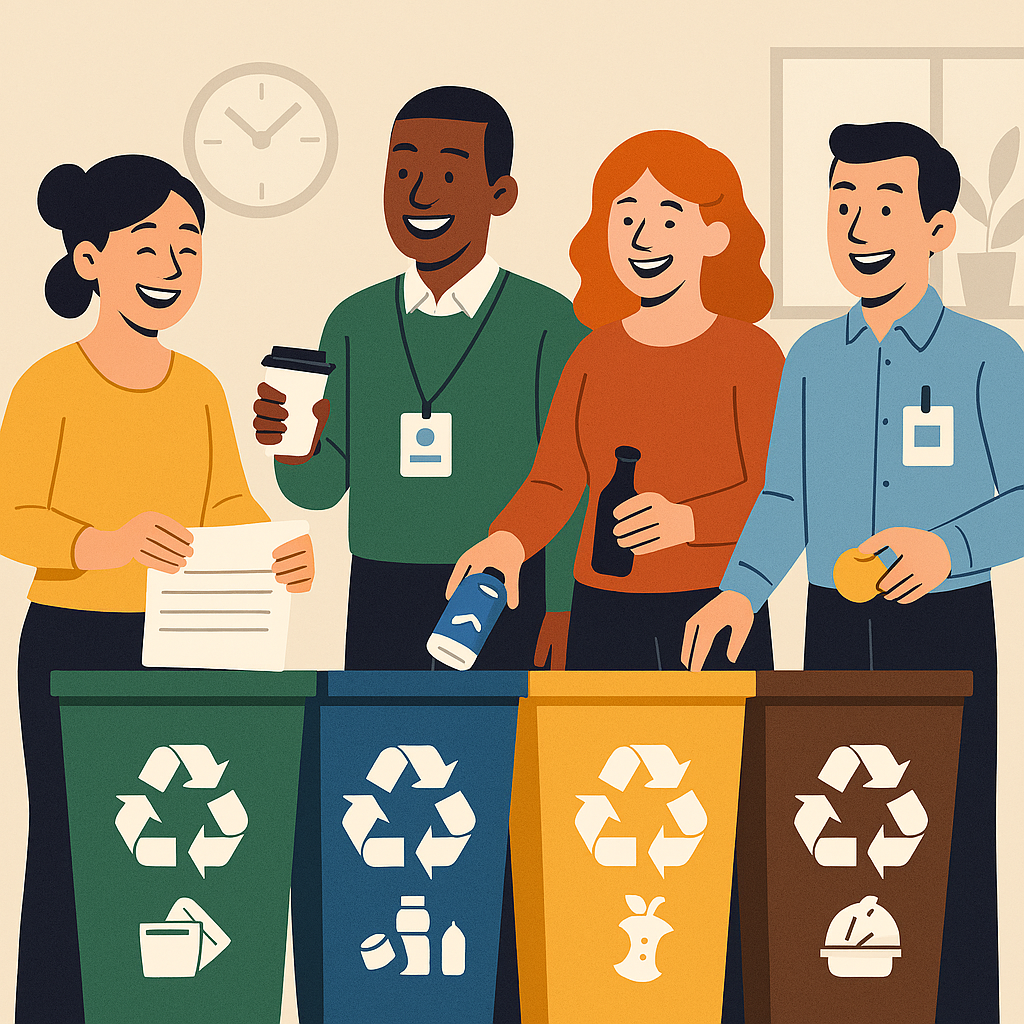
For most households and workplaces, the default requirement will be up to 4 containers:

  • Residual waste:
    Non-recyclable waste.
  • Food waste:
    May be collected separately or co-collected with garden waste where appropriate.
  • Paper and card:
    Collected separately from other dry recyclables by default.
  • Other dry recyclables:
    Plastic, metal and glass, which may be co-collected.

Containers may be bins, bags or stackable boxes – local authorities and waste contractors retain flexibility on the exact system, but the materials collected will be consistent nationally.

Does this apply to GP practices?

Yes. The policy applies to:

  • Businesses and relevant non-domestic premises, which explicitly include:
    • GP practices and primary care premises
    • Residential homes
    • Schools and universities
    • Hospitals and nursing homes
    • Other premises specified in regulations

This is in addition to, not instead of, your existing arrangements for:

  • Clinical waste
  • Sharps
  • Confidential waste
  • Pharmaceutical waste

Those specialist streams remain governed by existing NHS and waste legislation. Simpler Recycling applies to your non-clinical, municipal-type waste (e.g. office waste, kitchen waste, packaging).


Key timelines for practices

3.1 Core dates

  • By 31 March 2025
    All businesses and relevant non-domestic premises in England must have arrangements in place for the collection of core recyclable waste streams:

    • Glass
    • Metal
    • Plastic
    • Paper and card
    • Food waste

    (Garden waste is not expected to be relevant for most practices.)

  • Micro-firms (fewer than 10 FTE employees)
    Have a temporary exemption until 31 March 2027 to arrange recycling of core recyclable waste streams.

  • By 31 March 2027
    Kerbside plastic film collections must be in place for:

    • Businesses and relevant non-domestic premises
    • Households

3.2 Household collections (for context)

  • By 31 March 2026
    Local authorities must collect the core recyclable waste streams from all households, including weekly food waste collections (subject to transitional arrangements where long-term disposal contracts are a barrier).

This matters for practices that share sites or contracts with local authorities or mixed-use buildings, as systems may be redesigned across whole estates.


What practices will need to do

4.1 Map your current waste streams

Identify what you currently produce and how it is handled:

  • Clinical and infectious waste:
    Bags, sharps, anatomical waste, etc. (unchanged – continue under existing contracts and guidance).
  • Pharmaceutical waste:
    Out-of-date medicines, denatured controlled drugs, etc. (unchanged).
  • Confidential waste:
    Paper and digital media (unchanged – continue secure destruction).
  • Non-clinical “municipal” waste:
    • Office paper and card
    • Packaging (plastic, metal, glass)
    • Kitchen waste (food waste, packaging)
    • Waiting room waste (magazines, drinks containers, etc.)

Simpler Recycling focuses on this non-clinical, municipal-type waste.

4.2 Check your contracts

Review your current waste contracts:

  • Who collects your general waste and recycling?
  • Do you already have separate collections for:
    • Paper and card?
    • Mixed dry recyclables (plastic, metal, glass)?
    • Food waste?

If not, you will need to discuss changes with your waste contractor to ensure compliance by 31 March 2025 (or by 31 March 2027 if you are a micro-firm).

4.3 Ensure the required streams are collected

By the relevant deadline, practices should have:

  • Residual waste collection (non-recyclable).
  • Food waste collection
    • Separate, or
    • Co-collected with garden waste (if applicable and available).
  • Paper and card collection
    • Separately collected from other dry recyclables by default.
  • Other dry recyclables collection
    • Plastic, metal and glass may be co-collected.

Your contractor may provide:

  • Separate bins/containers for paper and card.
  • A mixed dry recycling bin for plastic/metal/glass.
  • A dedicated food waste caddy/bin.

4.4 Shared sites and landlords

If you are in:

  • A health centre,
  • A multi-occupancy building, or
  • Premises managed by an NHS landlord or third-party landlord,

you should:

  • Clarify who holds the waste contract (landlord vs practice).
  • Confirm that the building’s waste arrangements will meet Simpler Recycling requirements for all tenants.
  • Ensure that practice staff know which containers to use and that signage is clear.

Local flexibility and exemptions

5.1 Co-collection of food and garden waste

  • Practices are unlikely to generate significant garden waste, but where they do (e.g. small grounds), food and garden waste may be co-collected.
  • There is no evidence that co-collection prevents recycling/composting, as mixed material can be processed via in-vessel composting.

5.2 Co-collection of dry recyclables

The government’s position is:

  • Paper and card should be separately collected from other dry recyclables by default, to protect material quality and reduce contamination.
  • Plastic, metal and glass may be co-collected in one container.
  • Local flexibility remains where separate collection of paper and card is:
    • Technically impracticable
    • Economically impracticable
    • Provides no significant environmental benefit

In those cases, the waste collector must complete a short written assessment explaining the decision. Guidance and a template have been published nationally.

For practices, this means:

  • You do not need to write this assessment yourself.
  • You should:
    • Ask your contractor or landlord whether they are relying on such an exemption.
    • Ensure you still have a clear, workable system for staff.

Practical steps for GP practices

6.1 Short checklist

  • Confirm applicability:

    • Are you a micro-firm (<10 FTE)? If yes, note your extended deadline (31 March 2027).
    • If not, your deadline is 31 March 2025.
  • Review contracts:

    • Check your current waste contract(s) for:
      • Residual waste
      • Recycling (paper/card, mixed dry recyclables)
      • Food waste
    • Contact your provider to confirm how they will meet Simpler Recycling requirements.
  • Agree container layout:

    • Decide where each container will be placed:
      • Reception/waiting room
      • Staff room/kitchen
      • Offices
      • Back-office/records areas
    • Ensure clinical and non-clinical waste containers are clearly separated and labelled.
  • Update internal guidance:

    • Add a short section to your practice waste policy describing:
      • The new recycling streams
      • Which items go where
      • Who is responsible for monitoring bins and reporting issues
  • Train staff:

    • Brief all staff (including locums and temporary staff) on:
      • New containers and signage
      • The difference between clinical and non-clinical waste
      • What must never go into recycling (e.g. clinical waste, sharps, medicines, confidential documents).
  • Monitor and refine:

    • After implementation, review:
      • Are bins in the right places?
      • Are staff using them correctly?
      • Are there contamination issues (e.g. food in paper bins)?
    • Adjust signage and locations as needed.

Interaction with clinical governance and CQC

While Simpler Recycling is an environmental and waste policy, it intersects with:

  • Health and safety
  • Infection prevention and control
  • CQC expectations around safe and appropriate premises

Practices should ensure:

  • Clinical waste streams remain clearly segregated from general and recyclable waste.
  • Sharps and pharmaceutical waste continue to follow existing NHS and contractual requirements.
  • Staff training covers:
    • Correct segregation of clinical vs non-clinical waste.
    • Correct use of new recycling containers.
  • Policies and risk assessments are updated to reflect:
    • New containers and collection arrangements.
    • Any changes to storage or movement of waste on site.

Funding and support

Nationally, the government has committed to:

  • Provide “new burdens” funding to local authorities for weekly food waste collections for households.
  • Work with local authorities, businesses and the waste industry to support implementation.

For practices, this typically means:

  • Costs and arrangements will be negotiated through:
    • Your existing waste contractor, or
    • Your landlord/estates provider (for multi-occupancy or NHS-owned sites).

If you experience significant cost pressures or contractual barriers, you may wish to:

  • Raise this with your PCN, ICB or estates lead.
  • Inform the LMC so we can understand the scale of impact and feed back concerns where appropriate.

Frequently asked questions

9.1 Do we need seven bins?

No. The previous legislation could have led to up to seven separate containers. The updated policy sets a maximum default of four containers for most households and workplaces:

  • Residual waste
  • Food waste (possibly with garden waste)
  • Paper and card
  • Other dry recyclables (plastic, metal, glass)

Local authorities and contractors can offer more separation if they choose, but this is not mandatory for practices.

9.2 Does this change how we handle clinical waste?

No. Clinical, infectious, pharmaceutical and sharps waste remain under existing regulations and contracts. Simpler Recycling applies to non-clinical, municipal-type waste only.

9.3 We already recycle—do we need to change anything?

Possibly. You should check that your current system:

  • Collects all core recyclable streams (glass, metal, plastic, paper/card, food waste).
  • Separates paper and card from other dry recyclables, unless your contractor is formally relying on an exemption.

If your current system already meets these requirements, you may only need to:

  • Update internal policies and staff training.
  • Ensure signage is clear and consistent.

9.4 We are a very small practice – does this still apply?

Yes, but:

  • If you have fewer than 10 full-time equivalent employees, you are classed as a micro-firm.
  • Micro-firms have until 31 March 2027 to comply with the core recycling requirements.
  • It may still be practical and cost-effective to move earlier, especially if your landlord or contractor is changing systems across a whole building or area.


Call Now Button